

This article was written by Kelly Green, President of Kindermusik International
Artificial intelligence (AI) is on the tip of everyone’s tongue, and for educators and families, it’s the source of many concerns: How will young growing brains change? How will it change education? Which jobs will fade out and are there any new ones a robot can’t do? How do we preserve originality, creativity, and critical thinking when a machine can generate an answer in seconds?
Those are important questions, and I believe they point to another, more important one:
What deeply human capacities must we strengthen in children before AI becomes their constant companion?
In the 2026 Organisation for Economic Co-operation and Development’s (OCED) “AI and Skills” Report, OCED notes “AI is increasing the importance of digital skills, and the ability to use, analyse and interpret data. Alongside this, managerial skills and human skills such as problem-solving, creativity and innovation will remain essential.”
If artificial intelligence will help produce answers, summarize information, and offer solutions, then children will need even more opportunities to develop what cannot be downloaded: creativity and the ability to create something new with other human beings.
In other words, a generation of AI natives will need to become a generation of outside-the-AI thinkers.
Group musical learning can help us get them there.
What science says about shared music-making, creativity, and connection.
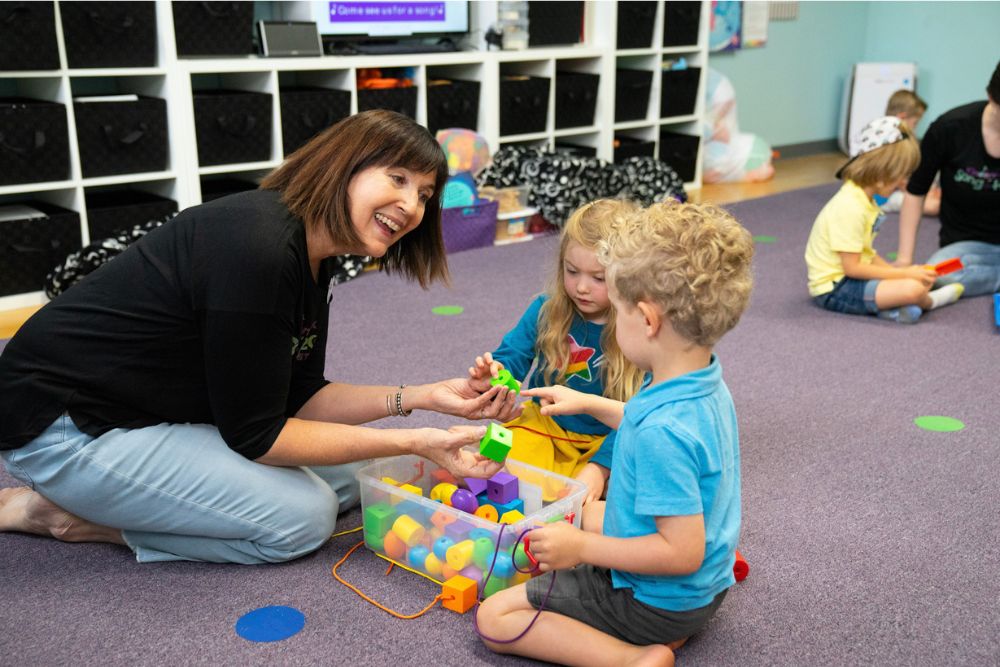
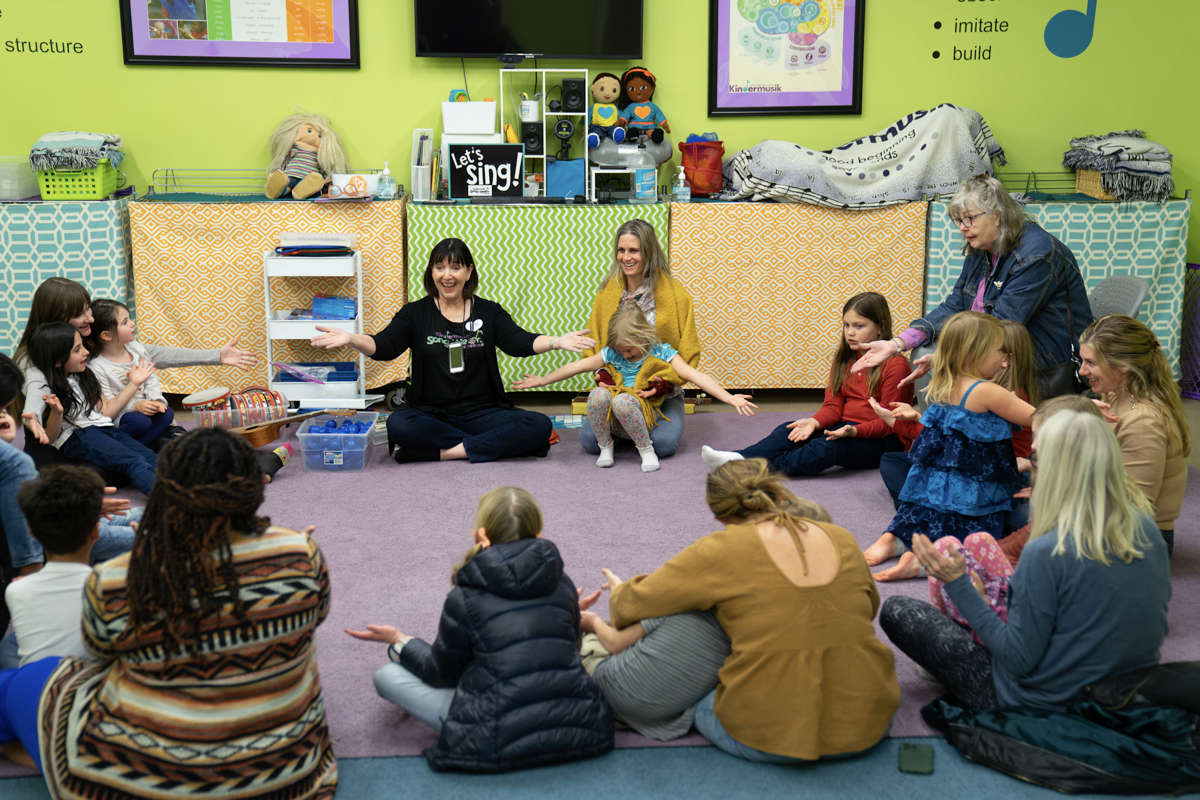
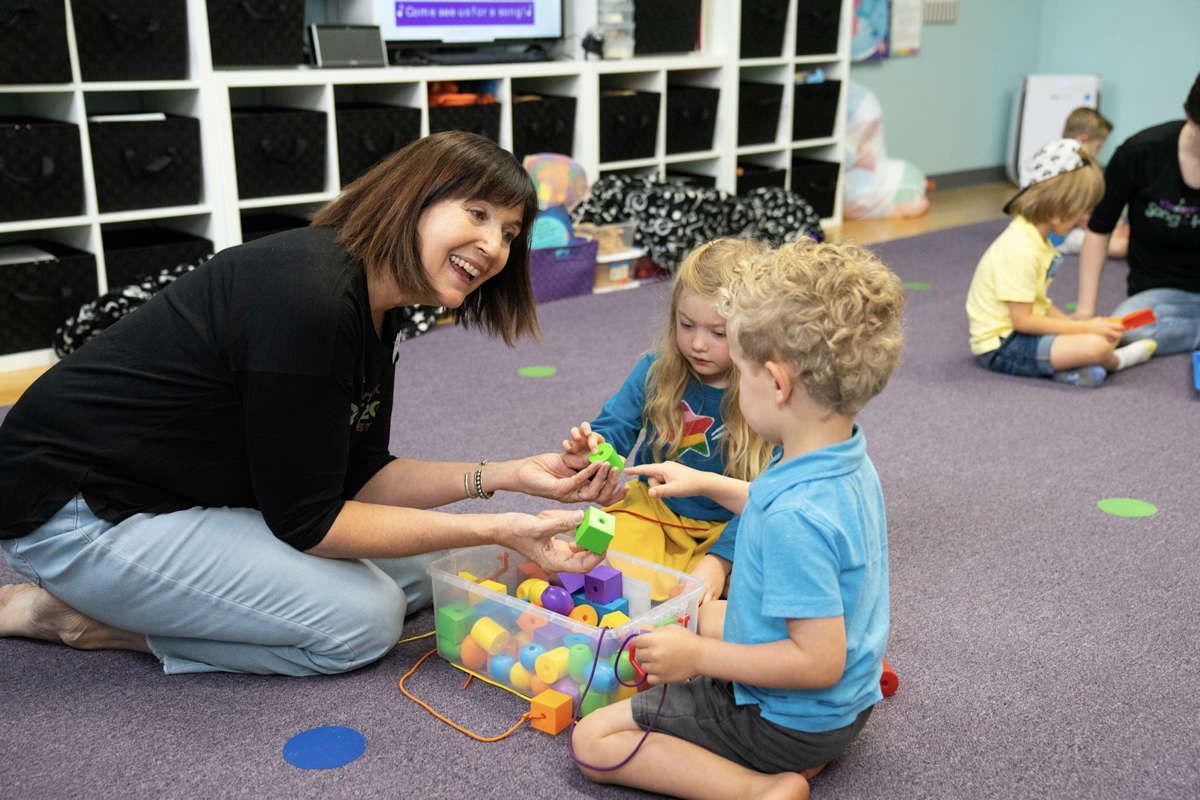
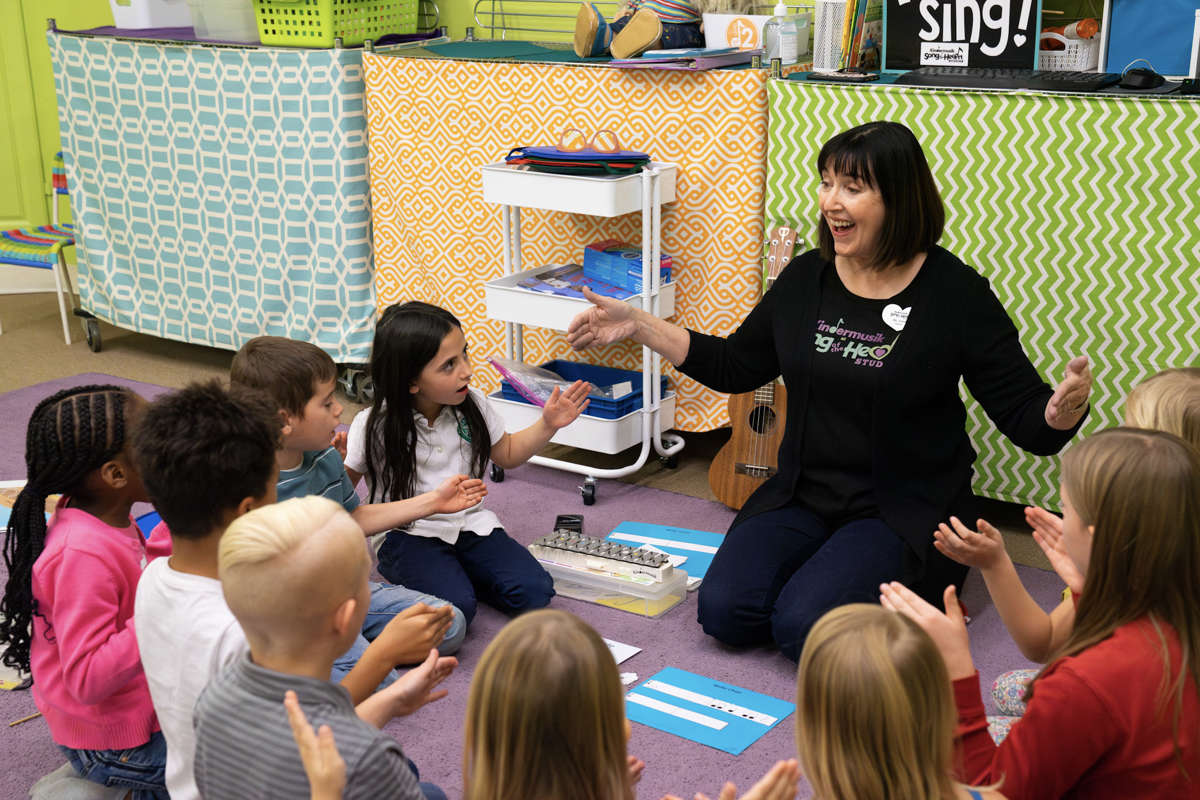
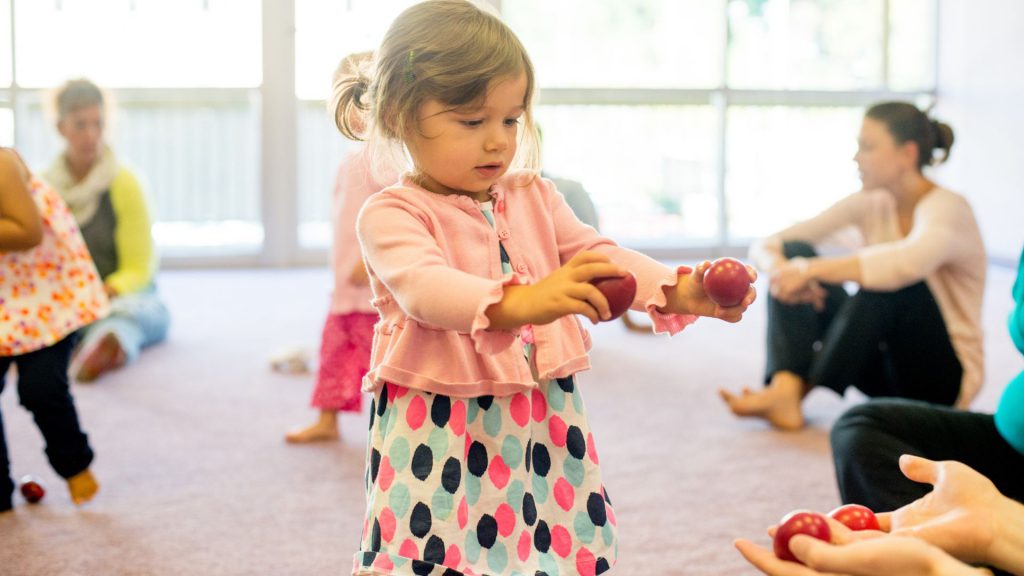
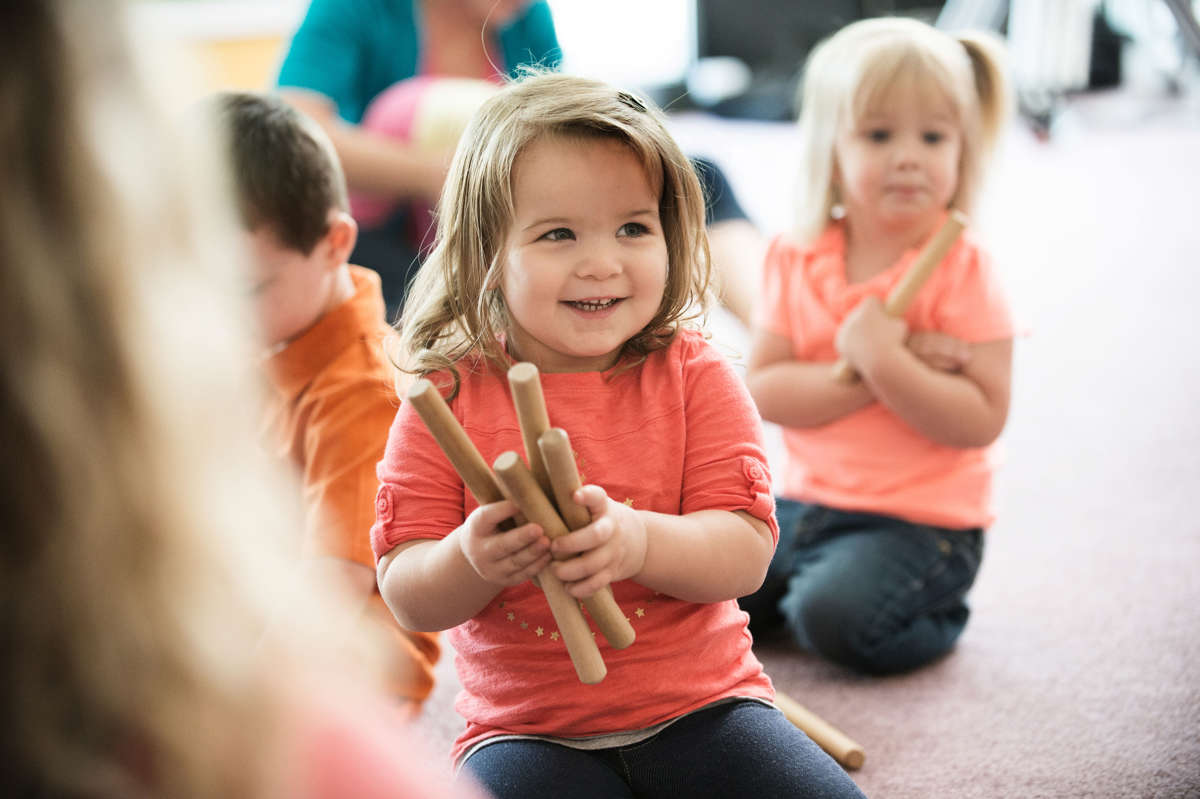
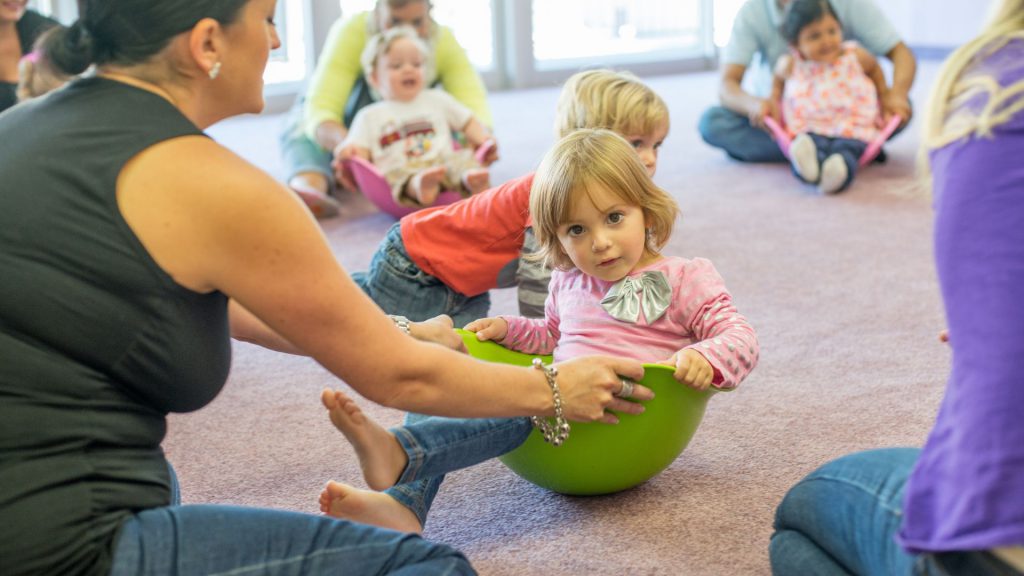
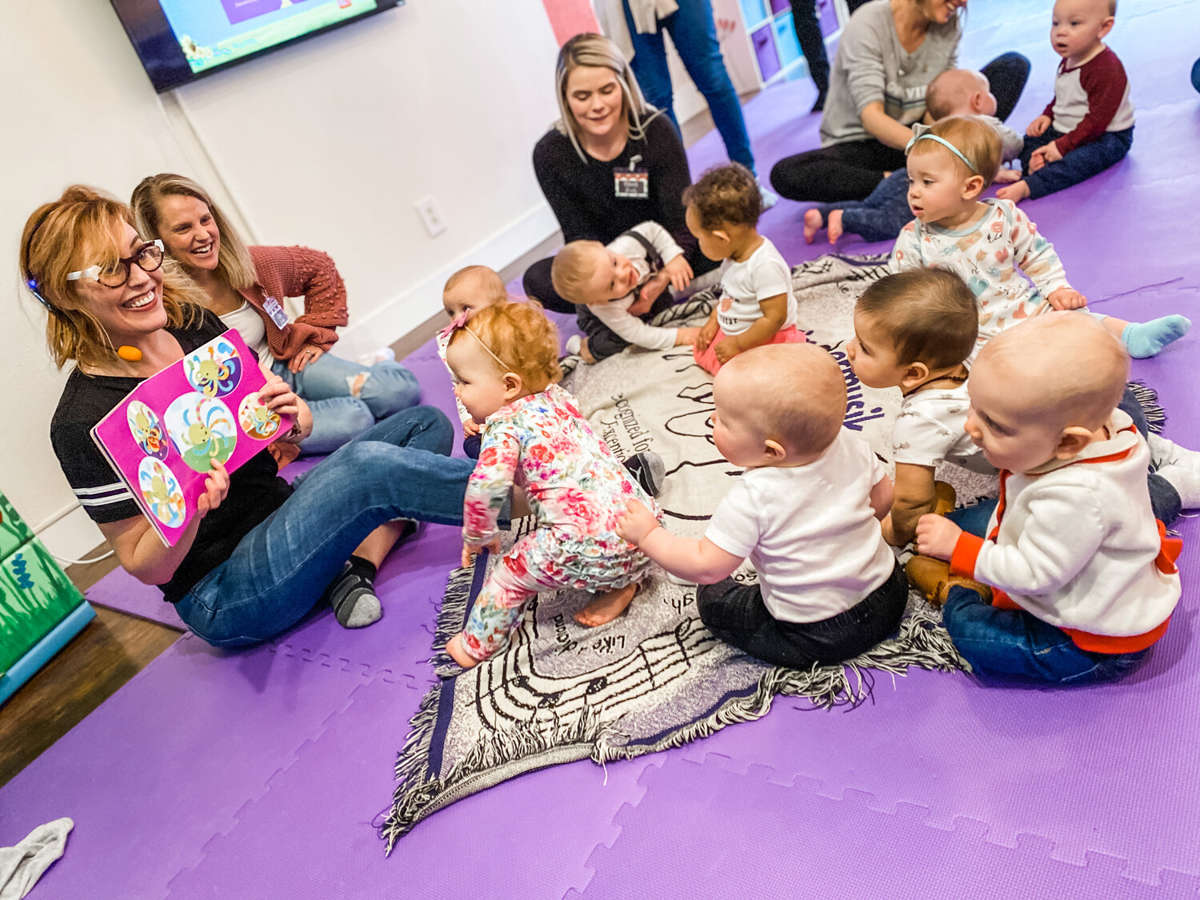
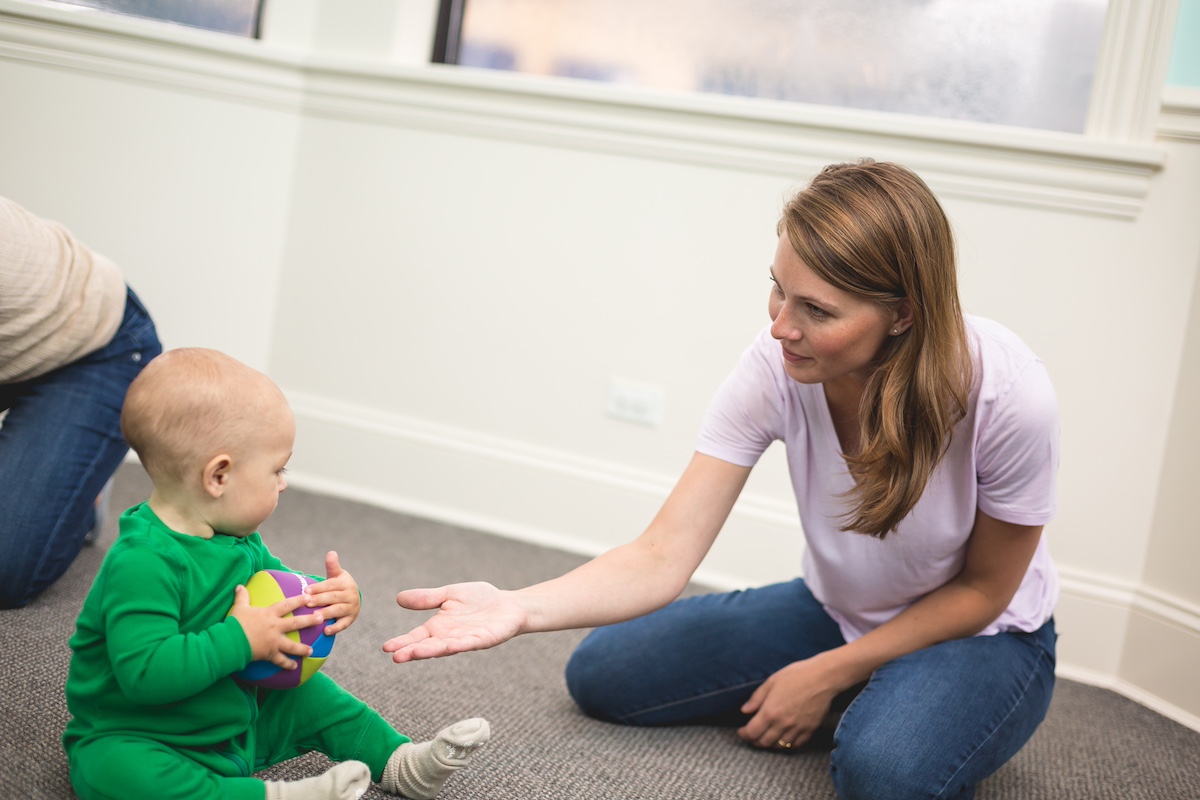
First, let’s talk about the definition of shared music-making. It’s not the same as listening passively to a playlist, as lovely and useful as listening can be. The especially powerful experience is making music with other people: a caregiver rocking and singing with a baby, toddlers echoing one another’s sounds, preschoolers passing a steady beat around a circle, families laughing their way through a familiar song. This is what’s at the crux of creativity and connection.

Let’s break those down one at a time.
Creativity is not a magical trait that some children inherit and others do not; all children have the capacity for vast creativity, and it grows through use. Children strengthen it when given the opportunity to experiment, notice patterns, anticipate what might come next, tolerate an unexpected result, and try another way.
We know that music-making is the perfect avenue for that, and a mixture of structured and unstructured play is key. A University of California study found that musical improvisation engaged reward structures in children more than playing a scale, making it more likely for them to repeat the activity and dig deeper into their own creative abilities.
But creativity is only half of the equation. The other is connection.
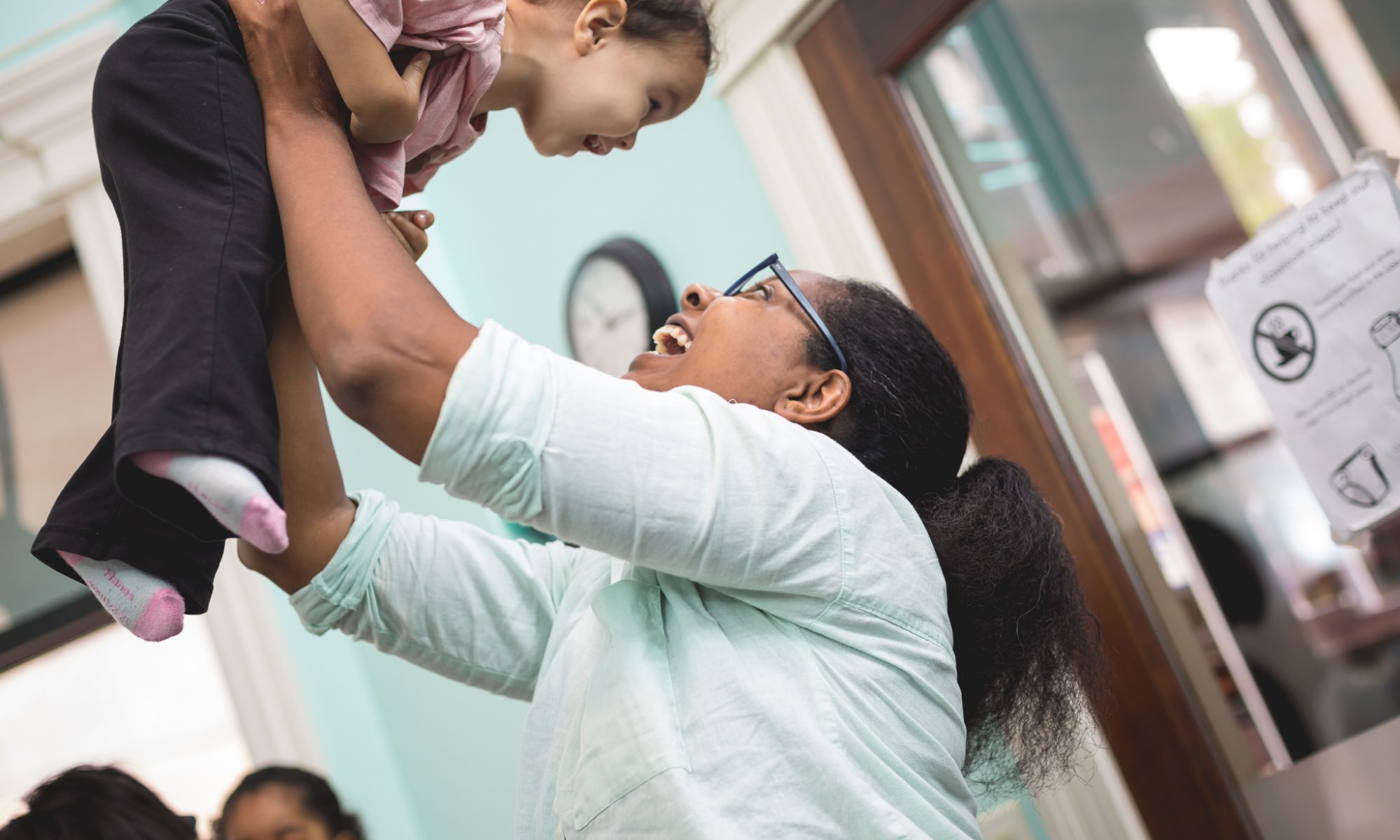
AI can respond conversationally. It can mimic warmth. It can help a child investigate almost any subject. But it cannot replace the human experience of two people noticing one another, adjusting to one another, and creating something together in real time.
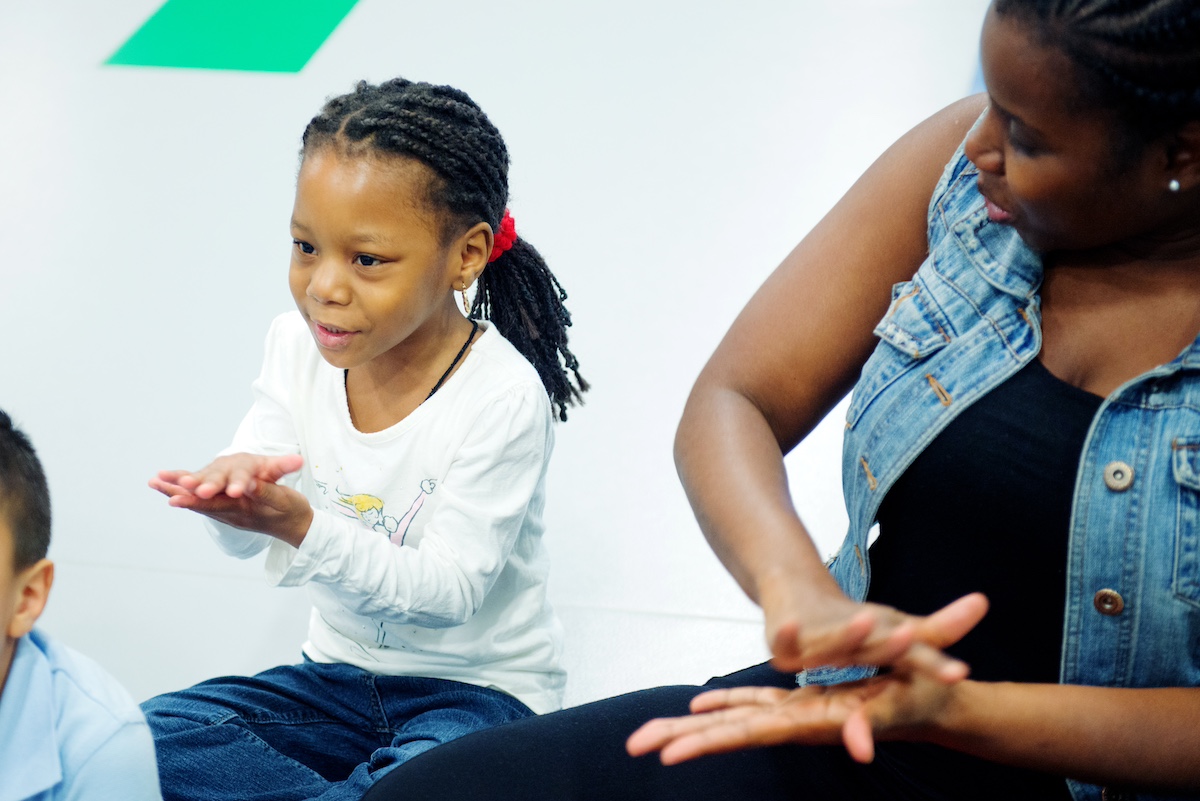
A University of Washington study found that 4-year-olds who participated in either synchronous (aligned) or asynchronous (not aligned) joint rhythmic movement activities showed increased sharing choices, but the synchronous group also showed increased cooperative behavior.
So, all rhythmic activities are beneficial, and we take it up a notch when children start to match each other’s movements.
Similarly, a University of Toronto Mississigua study cited 3rd and 4th grade children with poor prosocial skills who then made music together consistently showed an increase in sympathy and other prosocial behaviors.
Why? Again, collaboration and synchrony. Researchers concluded that especially the motor synchrony across body parts—singing with the mouth, instrument play with the right hand, and instrument play with the left hand—led to increases in social-emotional skills.
What do creativity and connection look like through musical play?

There are so many ways to boost creativity with intentional shared music-making, and once you watch children activate that neural reward system and continue exploring their own ideas, it’s thrilling to watch.
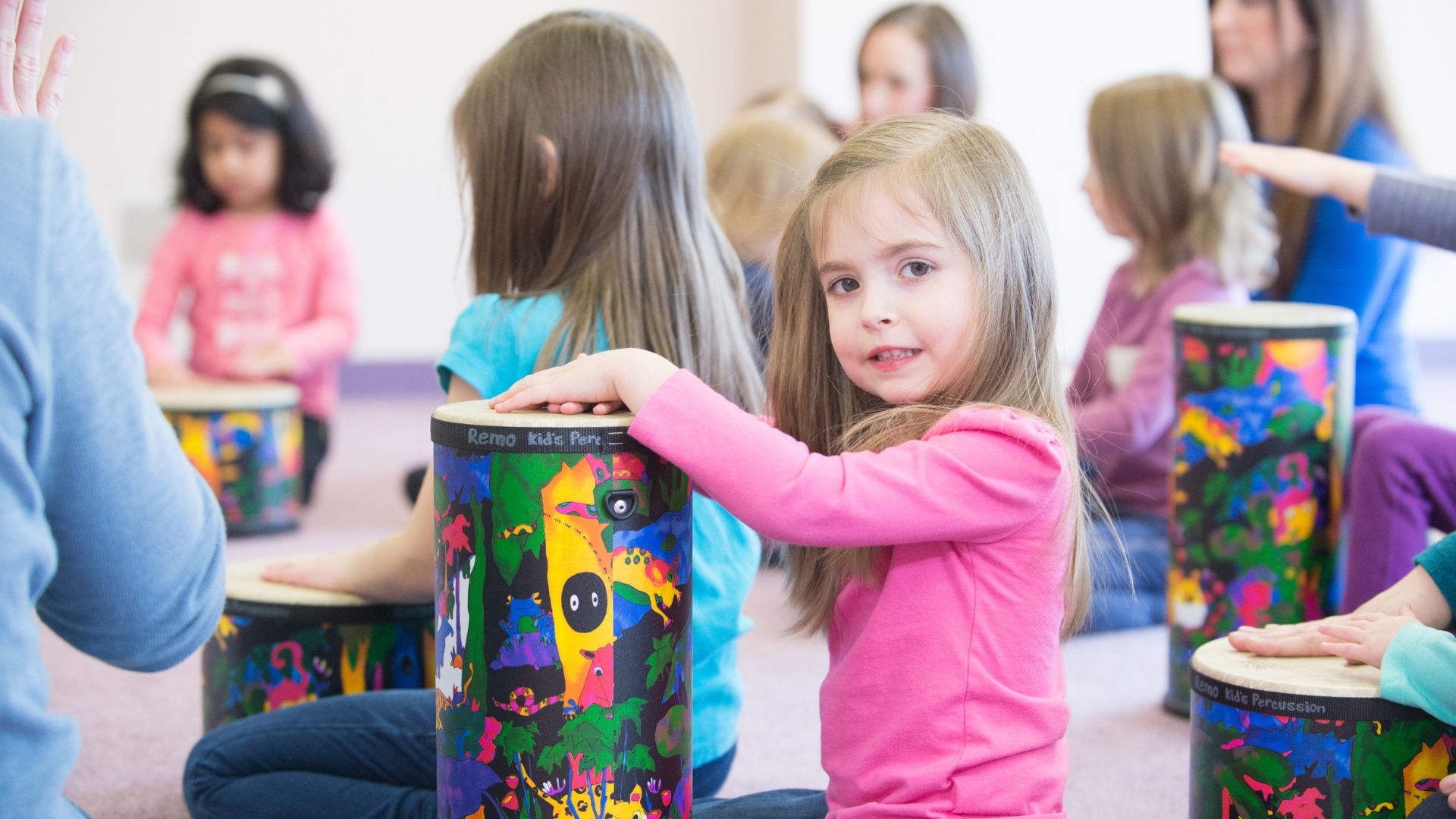
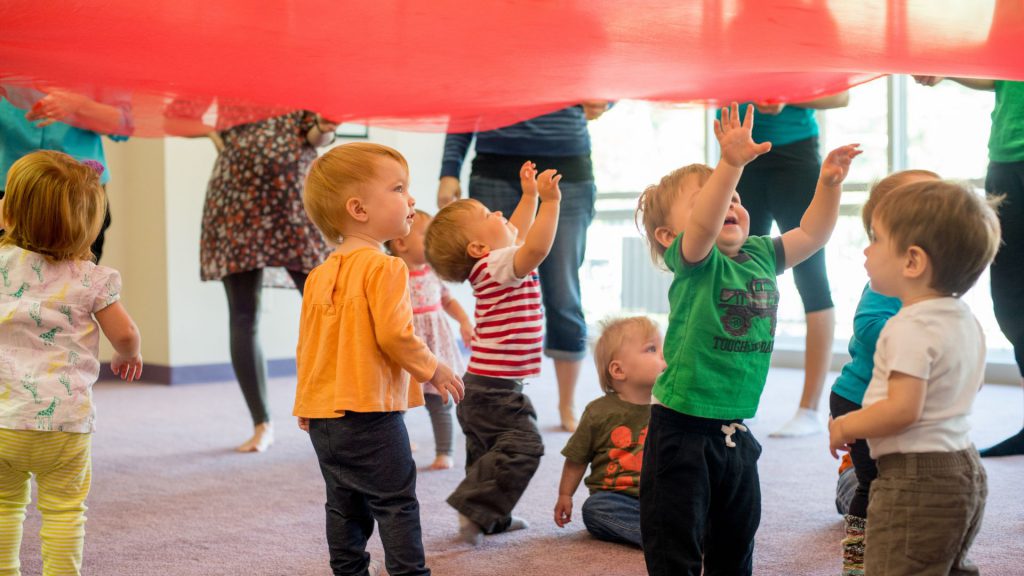
A child changes the ending of a familiar song. They invent a rhythm on a drum. They decide that a scarf is a bird, then a wave, then a rocket ship moving to the music.
These experiences provide a rich and joyful place to rehearse many of the habits creative thinking requires. Musical play lets children explore without needing every attempt to be “right.”
And here’s where creativity and connection intersect—children are not merely doing the same thing in the same room. They are watching, listening, and adapting to one another. Each child’s idea becomes an invitation; another child’s response changes what happens next. That human feedback loop strengthens both the creative experience and the relationship.
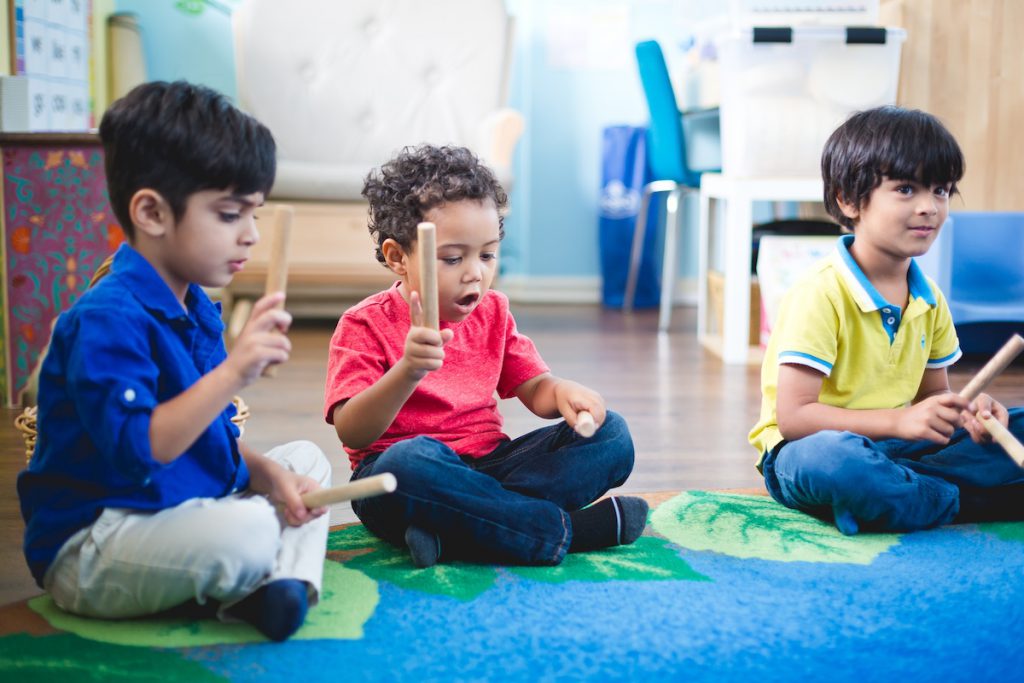
It all goes back to those moments of asynchronous and synchronous activities—a group of children start to play instruments to a song, they speed up, slow down, listen, adjust, and find their way back to the beat together.

That’s the power of shared music-making, and in a world where there’s constantly an automated answer, it’s going to take creativity and connection to analyze the data, explore it, and instill the confidence to create solutions that might be stronger.
The goal is not to compete with AI.
Used thoughtfully, AI can extend knowledge, remove barriers and help people turn ideas into action. The question is not whether today’s children will use it. They will.
The question is, who they will be when they do?
Will they accept the first answer they receive, or imagine a better question?
Will they reproduce familiar patterns, or recognize when the moment calls for a new one?
Will they work beside other people, or know how to create with them?
We know children will learn how to operate AI tools early, but it’s our job to protect and strengthen the capacities that make those tools worth having: creativity and connection.
It starts before the prompt box.
These capacities begin developing long before a child types a first prompt.
The sooner children experience the joy of making music with others, the more chances they have to practice being inventive, responsive and connected. And the more regularly they practice—at home, at school, and in community—the more deeply those ways of thinking and relating can become part of who they are.
We need children who can use extraordinary tools without outsourcing their own imaginations. We need problem-solvers who can think beyond what has already been generated. We need human beings who can connect easily and genuinely with one another.
We need outside-the-AI thinkers.
And, as always, Kindermusik helps with that.
Support the new “AI Generation” with shared music-making experiences like a Kindermusik grownup-and-me class near you or a classroom teaching kit.